

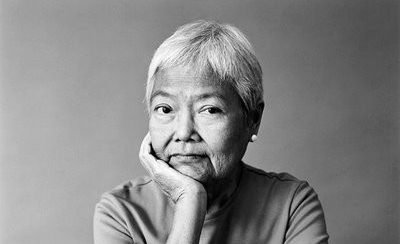
alike.com.ph—Back in the mid 70’s, acclaimed Doreen Fernandez began her career as a food writer. Back then, she had virtually no experience in the realm of food writing, but was drawn into the thick of things when her husband, Wili Fernandez, was assigned to write a food column for The Manila Chronicle. To do this, he enlisted her help, declaring “I’ll eat, she’ll write.” What started was a career in food writing that made Doreen Fernandez a staple name in Filipino food writing—published across multiple periodicals like the Philippine Daily Inquirer, The Manila Chronicle, and Food Magazine, as well as in her own books like Tikim and Sarap.
Doreen began with reservations, mostly from her inexperience with the subject. She was an accomplished writer and literature teacher, but she didn’t know how to describe food beyond how it tasted when she ate. With a column designed to “make mouths water,” would she be able to find enough words to do so?
It would take awhile, but Doreen found her footing in the realm of food writing. Moving past her initial apprehensions, her approach to the column would go beyond mere adjectives. She conquered not through flowery descriptions of adobo, sinigang, or a mangga, but rather touching on what such food meant to the person reading her words. What Doreen reached out for was memory.
Signifier and Signified
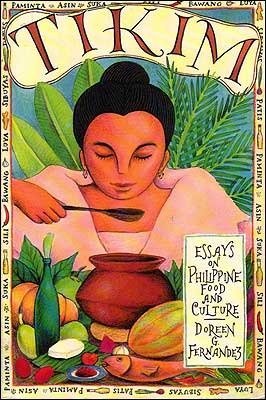
In her writing, Doreen touched upon the shared human experience of what she ate. To convey the taste of sinigang, she evoked not just her memory of the sour broth, but relied on the collective memory of her readers—people she has never met. Even the many variations of sinigang were integral in her description of the traditional soup. From mother’s recipes to distinct Asian culinary traditions, she would weave her columns together using this keen relationship between signifier and signified.
In her piece Balut to Barbecue: Philippine Street Food, she presents a list of the country’s street cuisine. She describes various offerings commonly found around the city, from peanuts pushed around in a giant cart to vendors selling noodles and siopao. Throughout this piece, Doreen never digs deep into the well of adjectives, opting instead for an enumeration of descriptions.
“Outside every elementary and high school, vendors cluster… The fishball carts have woks sitting on gas burners, stands for the dipping sauces—with and without chili. The vendors fry, or skewer-and-fry as one orders, and one dips into the sawsawan while standing around, or before walking away.”
Here, Doreen didn’t describe food through flavor, but through sight. Instead of describing the taste of fishballs and its sauces, she instead describes the setting of fishball—of a vendor and his gas burners standing outside the school. The reader is essentially invited to fill in the blanks themselves, remembering their own experiences; they’re memories meeting Doreen’s words halfway. The reader is affected, deeply, from a mere mention of what a fishball cart looks like, because we as Filipinos know what that experience is like, regardless of minute variations.
For Doreen, eating was never just about ingestion. The food we eat is and always will be a product of its society. As each civilization had their own rituals surrounding food, the Filipino is no different. Saint feast days, Sunday lunches with family. and the pancit among coworkers are all born from something Filipinos share, and Doreen had no problem tapping into it. When speaking of baked sugar ham, lechon, and suman, she spoke about it in terms of Noche Buena: the night of goodness known by every Filipino and celebrated every Christmas eve. She begins her description with her memories of her father and mother, and what Noche Buena was like with them. Soon, she moves to her friends’ experiences, all of whom describe what the quintessential Noche Buena dish is. The answers are all different, but the relatability is never lost. A single night gives a vivid description of food that evokes both taste and memory—of a cold night in December, eating food in celebration.
She writes, “Noche buena, night of goodness, is thus not only hallowed by the birth of Christ, by Christian tradition and family customers, but by life forces earlier than anyone remembers, by stirrings of the Filipino ethos.”
Her words never touched on the crispy brown skin of lechon or the glisten of a sweet ham. She assumes her readers know their own versions of these dishes, and instead allows the reader to come in with their own experience of Noche Buena and what that night is like for them. The reader could eat entirely different things than what was described, but that doesn’t matter because she was speaking of the night itself.
For the Foodies of Today
Doreen’s words are decades old, but her approach is as nuanced as the content we consume today. Food related paraphernalia is served en masse, finding its way in blogs, forums, shows, websites, Instagram accounts, apps, and many more platforms still waiting to be thought up. Yet as these pieces of content are concerned about capturing the attention for a limited amount of time, Doreen opts for something lasting. Her words continue to tap into the shared consciousness of her countrymen long after they were first published.
Savour the Word, Swallow the World
Writing about food can be as mundane as listing out ingredients or geeking about the newest ramen place in BGC. However, Doreen Fernandez shows that writing about food can, and should, go beyond saying the word delicious, and finding 50 more ways to say it. In fact, she preferred that the task of food writing not be left to newspaper columnists or restaurant reporters. The task should be left to historians, novelists, and poets—people who could “savour the word, and swallow the world.” She saw food writing was both an act of understanding and an extension of one’s experience, hence the need for people who could delve deep and tap into the inner workings of the human spirit.
Through her impactful writing and love of the form, Doreen Fernandez is and will continue to be the matriarch of Filipino Food writing until such a time someone unseats her.
REAL PEOPLE, REAL STORIES. WE COVER PERSONALITIES WHO ARE WORTHY OF MAKING THE HEADLINES. PROFILES, LIFESTYLE, CULTURE, ARTS, LITERATURE, ENTERTAINMENT—TELLING STORIES THAT MAKE US FEEL AND CELEBRATE LIFE. WE ARE ALIKE. FOR STORY PITCHES, PERSONAL ESSAY, LITERARY, AND ART SUBMISSIONS: EDITORIAL@ALIKE.COM.PH