
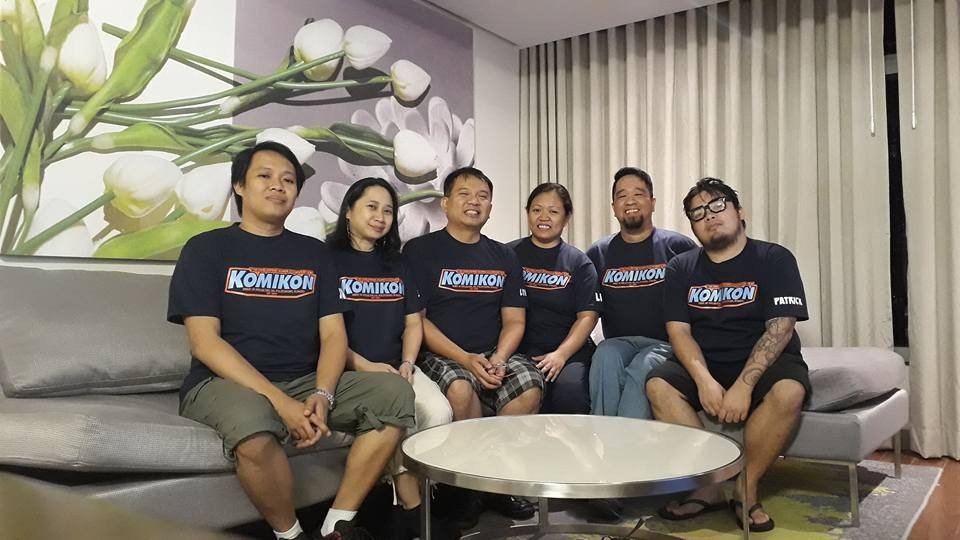
This weekend, the Bayanihan Center will play host to Summer Komikon 2018. Every year, organizers Komikon Inc. set up three events for local comic book fans: Indieket, Komikon, and Summer Komikon being the first for the year. It’s a time to celebrate local creators who are always looking for places to showcase their work.
Komikon is one of the longest-running annual conventions of its kind, beginning in 2005. It is not as grandiose as other pop culture conventions in the Philippines, with the likes of Asia ComicCon and AsiaPop ComiCon commanding a massive budget.
However, there’s a prevalent spirit behind Komikon, one that seeks to empower local comic book creators and push the craft further. Using the term “Komiks,” the Filipino term for the format, the convention emphasizes the need to stay rooted in the local scene and those working hard inside it.
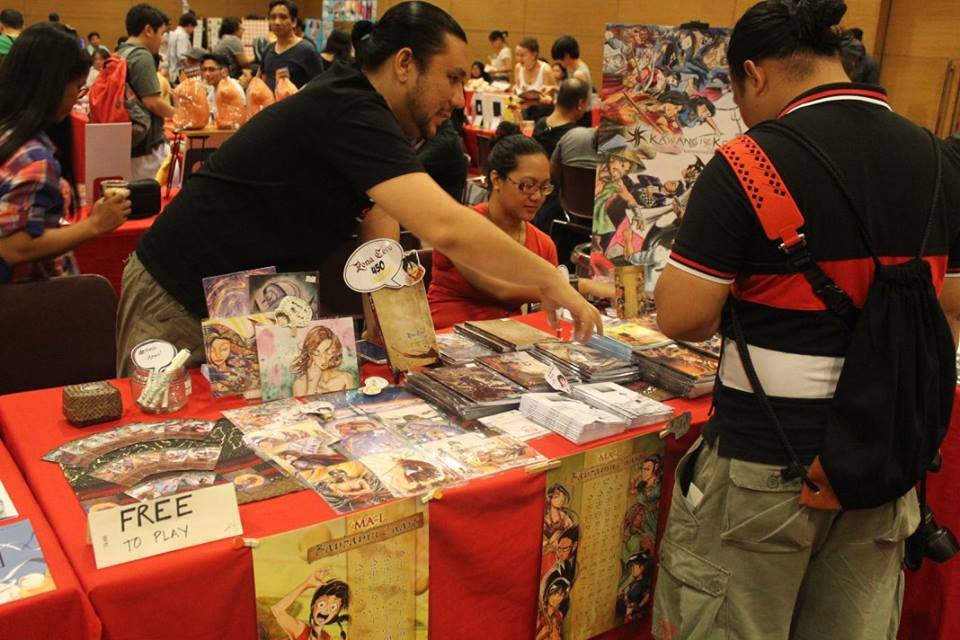
This is mainly done through its collection of stalls and booths, which allow businesses, sponsors, and creators to come together in what can be described as a grand marketplace. As one goes through the winding pathways, a dizzying amount of artwork can be seen. Komikon offers a vast space filled with every kind of art. From actual books to posters, to stickers and shirts. Some even set up shop to sell their collection of comic books, selling bulk stacks of graphic novels, or the occasional rare issue.
The highlight of these stalls is what the event calls Indie Tiangge, a place where comic creators are given ample space to put up their latest project and even offer commission artwork. Komikon even opens slots to schools to let younger talents dip their toes in the industry.
Coupled with these booths are the panels, where seasoned veterans and accomplished artist lead discussions on the craft. This year, Rian Gonzales (Jem and the Holograms, Betty and Veronica), Stephen Segovia (Hotdog Prince), and Carl Javier (Managing Editor for Anino Comics) will be talking about everything from creating cover art to editing comics.
With no local publisher like DC or Marvel, something like the Indie Tiangge and Komikon is vital for those passionate about the format and creating stories with it. There is an audience for it, as events like Asia ComicCon and Free Comic Book Day will show, but the space in which to access locally made comics is tough.
When one thinks of local comics, the pickings are very slim. There are several gems like Budjette Tan’s Trese, and Carlo Vergara’s Zsazsa Zaturnnah, but the fact remains that the industry is dominated by foreign entities like DC and Marvel. Even if a reader isn’t looking for superhero comics, Image, Drawn+Quarterly, and many other Western alternatives remain. Komikon looks to plant the flag of Philippine comics amidst the juggernauts of the industry, betting on the spirit of the Filipino and its creative talent. Without a company like Marvel or Drawn+Quarterly that primarily produces comics/graphic narratives, places like Komikon serves as the premier spot to check out local talent and what they’re cooking up.
The future for local comic book creators is quite vague to say the least, but that has never deterred Komikon. For over a decade, it continues