

Foodies and chefs were in for some sad news as the World Street Food Congress (WSFC) 2018 announced that they will not be pushing through due to circumstances beyond the organizers’ control. On their Facebook page they wrote, “Makansutra will be planning ahead for the next World Street Food Congress so stay tuned here and we’ll keep you all updated and will follow up with all our valuable plans and discussions with you thus far. We regret any inconvenience caused. Thank You.”
The announcement of WSFC’s cancellation came days after Madrid Fusion Manila—another huge food congress— announced it would no longer be pushing through this year. The World Street Food Congress would have featured 28 of the world’s best Street Food Masters from 12 different countries. 100,000 visitors attended the WSFC in 2017, with participating countries that included Singapore, China, India, Malaysia, Vietnam, Thailand, Mexico, Germany, Japan, and the United States.
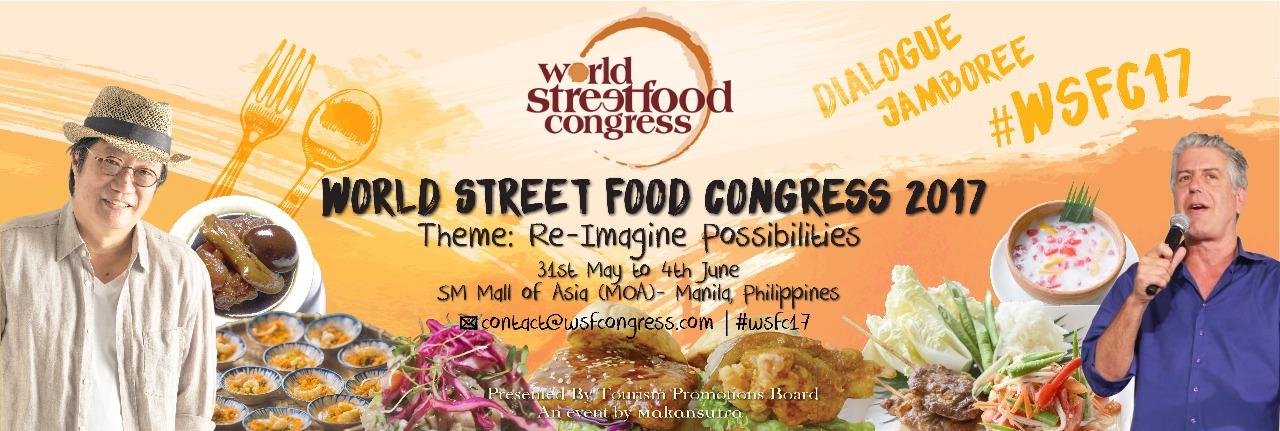
Both events are supported by the Tourism Promotions Board which featured cooking demonstrations and stalls serving dishes not only from the Philippines but from around the world. Many attendees have claimed that these events highlighted international cuisine too much which may have been one of the reasons for its cancellation. According to an article written by Margaux Salcedo, events such as the Madrid Fusion Manila has three main purposes: put the country on the world map of culinary players, put a handle of Filipino chefs on the map, and inspire a new generation of chefs by having their idols talk here. Unfortunately, the first purpose may be the hardest to attain.
Filipino food has had a presence in the United States but was never a strong and coherent social force such as Korean, Thai, Vietnamese, or Latino food. For one reason, the adobo alone has hundreds of versions such as Adobong Puti, Adobong Gata, adobo with soy sauce as its primary ingredient, or adobo with vinegar. Each restaurant is the product of the chefs’ own interpretation of the dish making it extremely hard to attain the authentic Filipino taste, whatever that may be.
Many claim that the reason why Filipino food has never really taken off is because it is too complex, coming from a varied heritage. Filipino food has strong influences from China, Spain, and America allowing it to have striking similarities to already established international cuisine. Filipino food does not possess any real distinct personality that would make it stand out among other cuisines.
Another reason why Filipino food has had a hard time taking off overseas is because local ingredients are hard to come by outside the country such as tuba, lemongrass, and even the kind of pigs used for lechon. For example, fresh kalamansi is widely used as an ingredient in Filipino dishes but the well-loved fruit is hard to come by abroad. In addition, there are flavors and ingredients that many people are still unfamiliar with making describing a dish quite difficult to someone who hasn’t tried Filipino food before.
While events such as the WSFC could have been a great opportunity to advertise Filipino food, we shouldn’t be limited to holding events in the country to get Filipino food out there. The pride and confidence we Filipinos feel towards Filipino food will help push it to be better understood and appreciated by more people. By creating sinigang with enough love and passion that others become curious as to what that dish is. Filipinos in other countries have been trying to propel Filipino flavors by opening Filipino restaurants. We can’t necessarily do the same, but we here at home also have to find ways in which to propel Filipino food to the international stage.