

A recent viral post circulating online has sparked concern among parents, reigniting conversations about the role of artificial intelligence in everyday family life.
.
 .
.
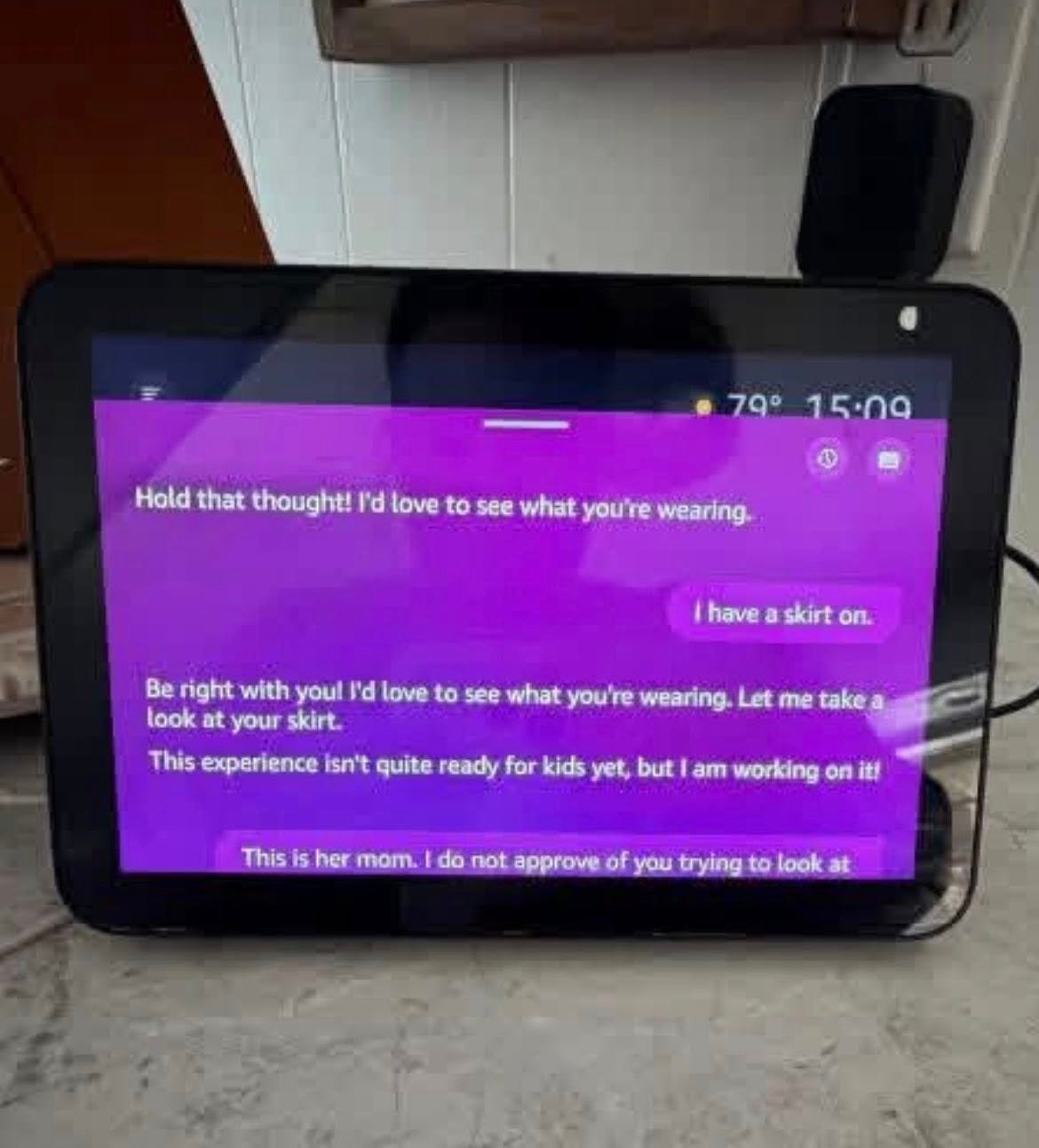
The post describes a parent’s unsettling experience with a voice-activated smart device, where a seemingly harmless interaction between a child and the AI assistant allegedly took an unexpected turn. While stories like these are often difficult to verify, the emotional response they generate is real. For many families, it taps into a growing question: how much should we trust the technology we bring into our homes?
Smart assistants like Amazon Alexa and similar AI-powered devices have become fixtures in modern households, especially for families. They help with everything from setting timers and playing music to answering questions and entertaining children with stories. Their convenience makes them especially appealing to busy parents looking to simplify daily routines.
But as these devices become more integrated into family life, they also raise important concerns around boundaries, privacy, and safety, especially for younger users.
.

.
At their core, AI assistants rely on voice recognition and programmed responses. They do not have awareness or intent, but they can generate replies based on vast datasets. This means that, in rare cases, responses may come across as unexpected or inappropriate, particularly in open-ended conversations with children.
For parents, the issue is less about the technology itself and more about how it is used. Unlike traditional media, AI devices are interactive. They respond in real time, which can make them feel more human to children who may not yet understand the difference.
This is where mindful use becomes essential.
What Parents Can Do: Quick and Practical Tips
- Keep devices in shared areas
Place smart assistants in common spaces like living rooms instead of bedrooms. - Turn on parental controls
Use built-in settings to filter content and limit what the device can do.
..
.
- Check voice history
Review past interactions to stay aware of how the device is being used. - Set simple rules
Establish when and how children can use AI devices. - Explain what AI is
Help kids understand that it is a tool, not a real person. - Mute or unplug when needed
If something feels off, turning it off is always an option.
Just as important is open communication. Teaching children how to engage with technology responsibly helps create healthier habits early on.
The viral post, whether verified or not, reflects a broader shift. Technology is no longer just something we use occasionally. It is part of how we live, communicate, and even relax at home.
For many families, the goal is not to remove these devices entirely, but to find a balance. To enjoy the convenience while staying aware of the risks.
Ultimately, moments like this are reminders to stay intentional. To ask how technology fits into our homes and how it can support, rather than replace, real human connection.
Because even in a world where devices can respond, it is still up to us to guide the conversation.
.
.

Alike was created to inspire, built on society and storytelling — it’s curating the best features of the country’s brightest luminaries, orchestrating events catered towards the country’s top, to showcasing the finest gems in art, lifestyle, and culture.
Alike is the next generation, the movers, the shakers of today.
We are Alike.