
Back in August 2019, the Philippines officially declared that the country was in the middle of a national dengue epidemic. Cases of the mosquito-borne virus had risen “to unprecedented levels in a span of a few months. Between January and July 2019 there have been 146,062 dengue cases – 98 per cent higher than the previous year. Of that number, 622 people have died.”
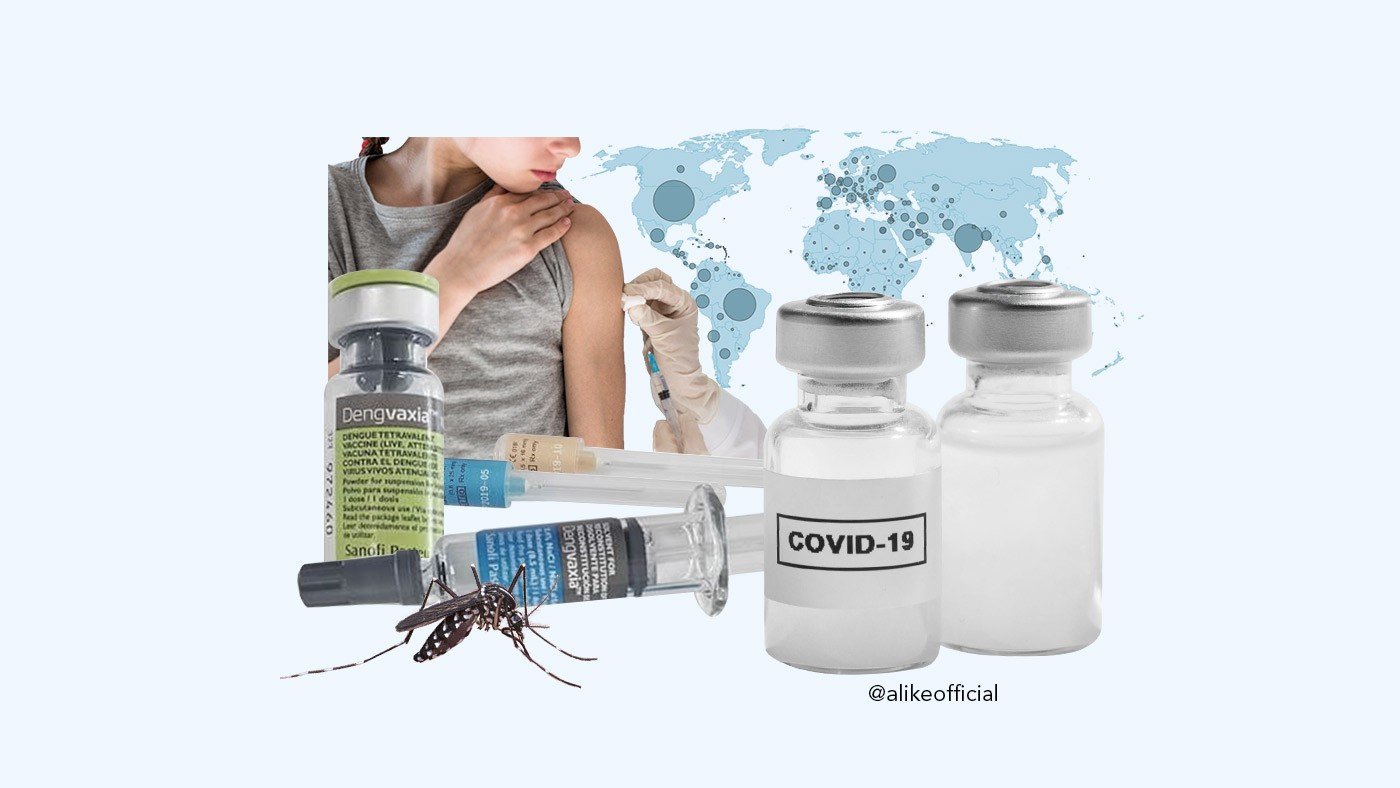
While there is no known cure, a vaccine that helps prevent dengue became available. The World Health Organization (WHO) endorsed the first dengue vaccine, Dengvaxia, in April 2016. It was created by French pharmaceutical firm Sanofi Pasteur. According to the WHO, Dengvaxia is “93 per cent effective against severe dengue and reduces hospitalizations due to the disease by 82 per cent. That same month, the Philippine’s government began a $67 million (£54m) school-based dengue immunization program. By the end of the year, more than 800,000 children were given the vaccine.” But rain has fallen on the short parade.
Sanofi Pasteur released a statement, in November 2017, announcing that new analysis had revealed that Dengvaxia is most effective in patients “who have already been infected by at least one serotype of dengue.” Meanwhile, “it could lead a person to develop severe dengue if he or she had not been infected by the virus before vaccination.”
The announcement had made the Philippines worried with fear and led to a widespread mistrust of the vaccine. The Department of Health, then, put an end to the sale of the vaccine in December 2017.
Because of this issue, a 2018 joint report by the WHO and UNICEF, stated “that immunisation coverage in the Philippines has been declining since 2008 especially for vaccines addressing tuberculosis, polio, diphtheria, and measles.”
“Without any doubt, the Dengvaxia issue caused the chaos and panic among mothers who began to fear vaccination,” says Lulu Bravo, a pediatrician of 43 years and the executive director of the Philippine Foundation for Vaccines, a non-profit composed of medical professionals and concerned public individuals.
The whole world is currently at the grip of a health crisis. A development for safe and effective vaccine and therapeutics is the clarion call of the people. But adding to the growing chorus pleading for a dose is the raising concerns from both the scientists and general public from all over the world.
As of August 13, 2020, there are 29 candidate vaccines in clinical evaluation under World Health Organization, and six of them have already entered Phase 3 clinical trials. While this is music to ears, Filipinos still can’t help but feel skeptic about the news. To top it all off, President Duterte just announced the approval of the Russia’s COVID vaccine claiming it as a “world first.” He was even serious about volunteering to “receive it in public,” claiming he “will be the first to be experimented on.”
But several US health leaders and vaccine experts have expressed doubt “about whether the vaccine has been proven to be safe and effective, since no data from human trials of the vaccine has been released, and it has not yet gone through large Phase 3 trials.”
It is understandable how scientists work as hard and as fast as possible and how the government is desperate to look for anything that would forestall the deaths, closures, and quarantines resulting from COVID-19, given the scary numbers of positive cases every day. But according to Shibo Jiang, a professor of virology at the School of Basic Medical Sciences, Fudan University, Shanghai, China, and at the New York Blood Center, New York, USA, beating this virus calls for a safe and potent vaccine while keeping in mind that “they [regulators] should also demand strong preclinical evidence that the experimental vaccines prevent infection, even though that will probably mean waiting weeks or even months for the models to become available.”
Professor Jiang, like many Filipino people, is troubled and concerned “that vaccine developers will rush in too hastily if standards are lowered.” Despite the genuine need for urgency, he stands his ground saying, “a rush into potentially risky vaccines and therapies will betray that trust and discourage work to develop better assessments.”
We may be hoping for a potent vaccine that could finally put an end to this crisis but we don’t need to cut corners only to find ourselves (again) in the cusp of fear and terror, convincing ourselves that a drug that was supposed to bring healing was injected to worsen the already-worse situation.
—alike.com.ph
REAL PEOPLE, REAL STORIES. WE COVER PERSONALITIES WHO ARE WORTHY OF MAKING THE HEADLINES. PROFILES, LIFESTYLE, CULTURE, ARTS, LITERATURE, ENTERTAINMENT—TELLING STORIES THAT MAKE US FEEL AND CELEBRATE LIFE. WE ARE ALIKE. FOR STORY PITCHES, PERSONAL ESSAY, LITERARY, AND ART SUBMISSIONS: EDITORIAL@ALIKE.COM.PH
FOR BRANDING AND MARKETING, VIDEO PRODUCTION, AND SOCIAL MEDIA MANAGEMENT — COLLABORATE WITH US: MEDIA@ALIKE.COM.PH