
Photo from Entertainment Tonight
Before Runway ever prints another issue, the Devil Wears Prada 2 press tour is already doing what the original film made iconic: turning fashion into language, power into clothing, and every city stop, into a quiet runway for reinvention. If Miranda Priestly taught us anything, it’s that fashion is never just “nice clothes”, and this tour makes sure we remember.
Across Mexico, Seoul, Tokyo, and Shanghai, Anne Hathaway and Meryl Streep aren’t just revisiting their characters; they’re updating the entire hierarchy of style, one impeccably tailored moment at a time.
MEXICO STOP
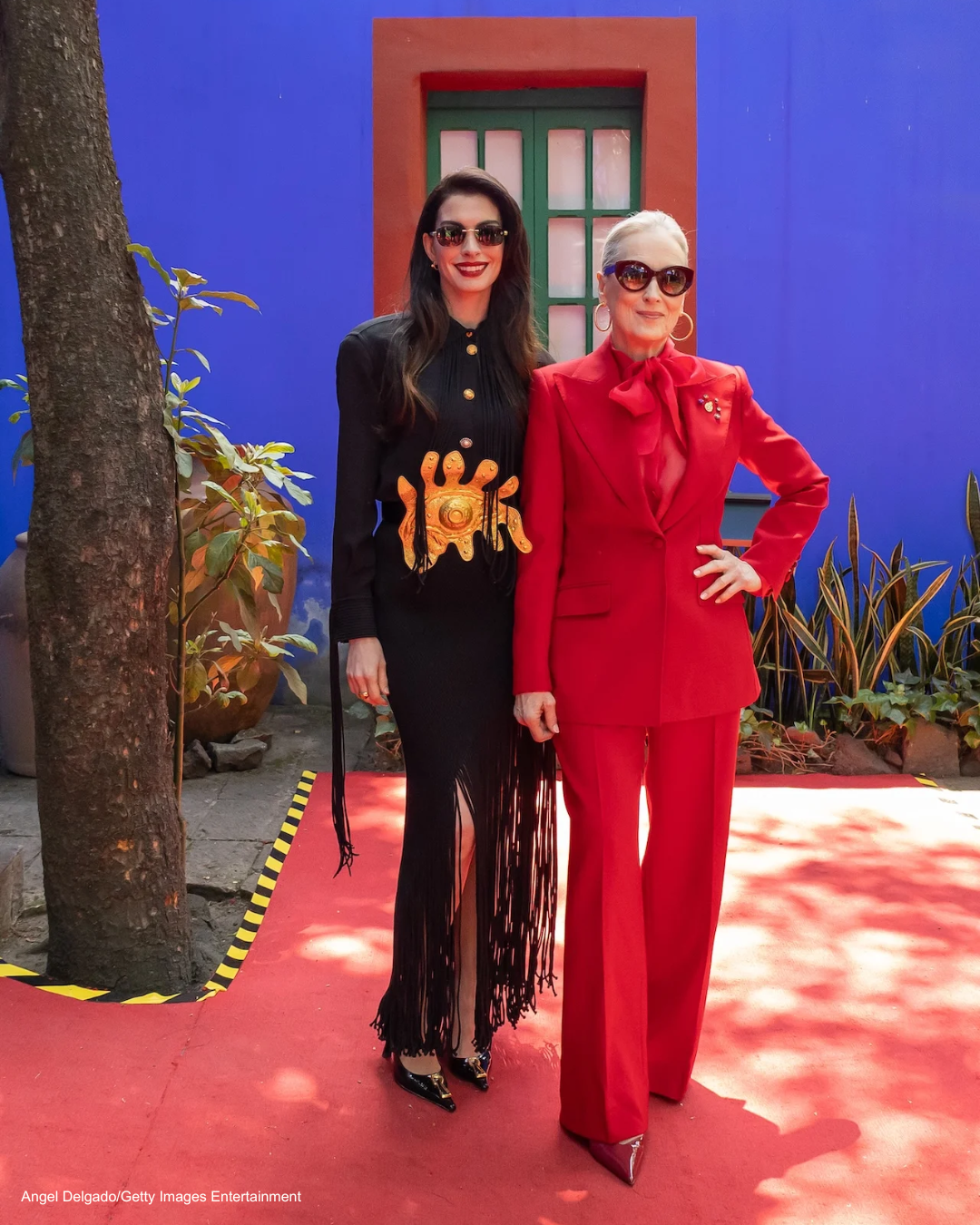
At the Frida Kahlo Museum, Anne Hathaway arrived in Schiaparelli looking like she understood the assignment — and possibly wrote it herself. Fringe detailing across the shirt and pencil skirt created constant movement, catching light with every step, as if the outfit refused to sit still unless it was being photographed. The gold eye-shaped belt, oversized and surreal, sat at the center like a knowing wink from the fashion gods. Very Schiaparelli. Very “that’s all.”
Meryl Streep, meanwhile, delivered what can only be described as Miranda Priestly on a casual Tuesday — this time in a fire red Dolce & Gabbana number. The sharp shoulders and peak lapels carved out authority in pure vertical lines, while the wide-leg trousers softened the severity just enough to keep HR calm. The organza bow blouse added a soft touch, like asking for florals in spring and actually meaning it.
.
.
SEOUL STOP
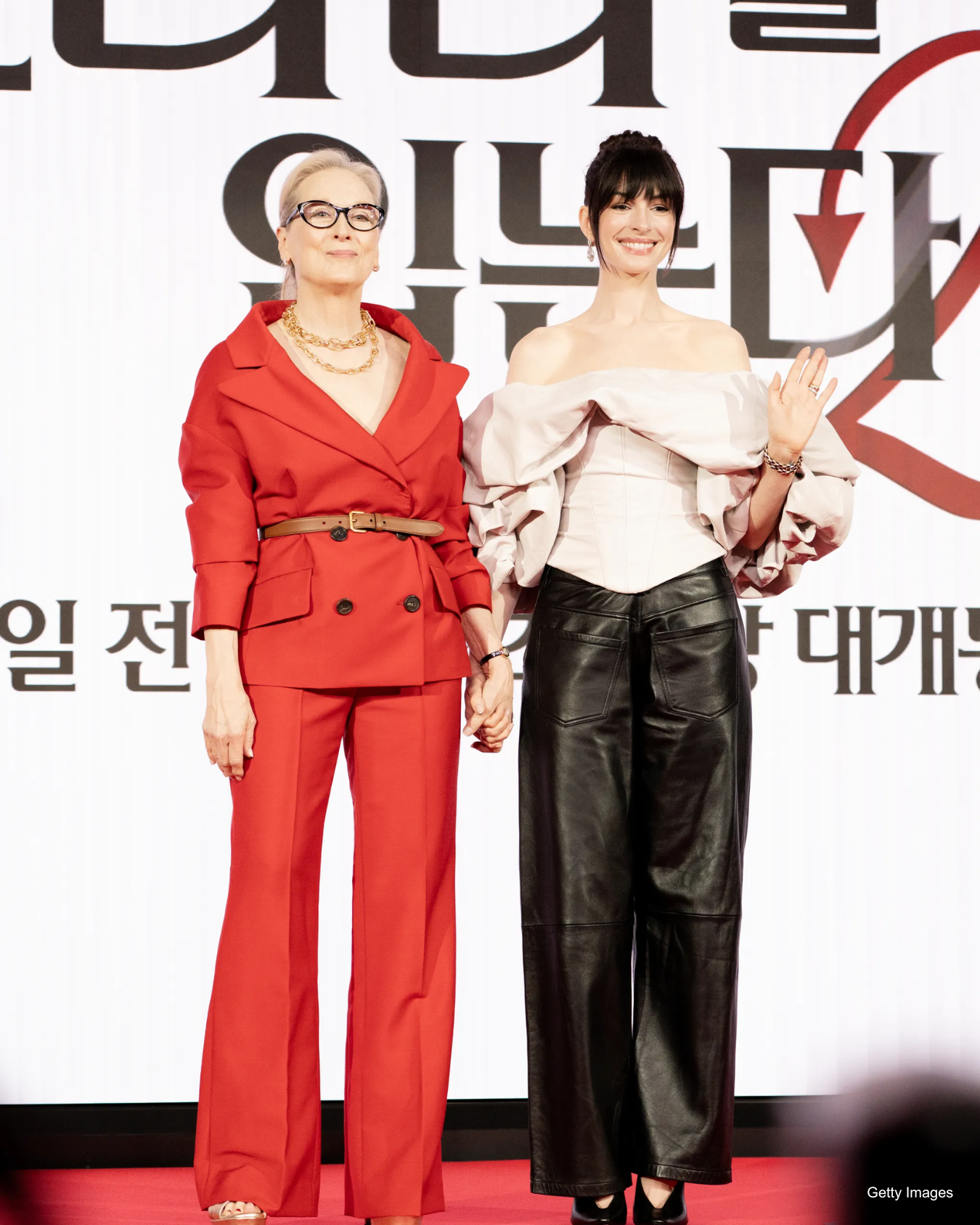
During their Seoul stop, Meryl Streep wore a monochromatic red Prada suit that, of course, felt entirely in character. The tailoring was almost architectural, with clean, uninterrupted lines and a controlled silhouette that fit her like a glove. Its strength came from restraint: tone-on-tone dressing that relied less on embellishment and more on cut, proportion, and presence.
Beside her, Anne Hathaway softened the mood in a striking Vaquera look, offering a quiet but deliberate counterpoint. She wore an off-shoulder beige top that revealed the neckline and collarbones, paired with black leather pants. The contrast between the fluidity of the top and the structure of the leather created a natural tension — effortless yet composed, relaxed but still intentional.
.
 .
.
TOKYO PREMIERE
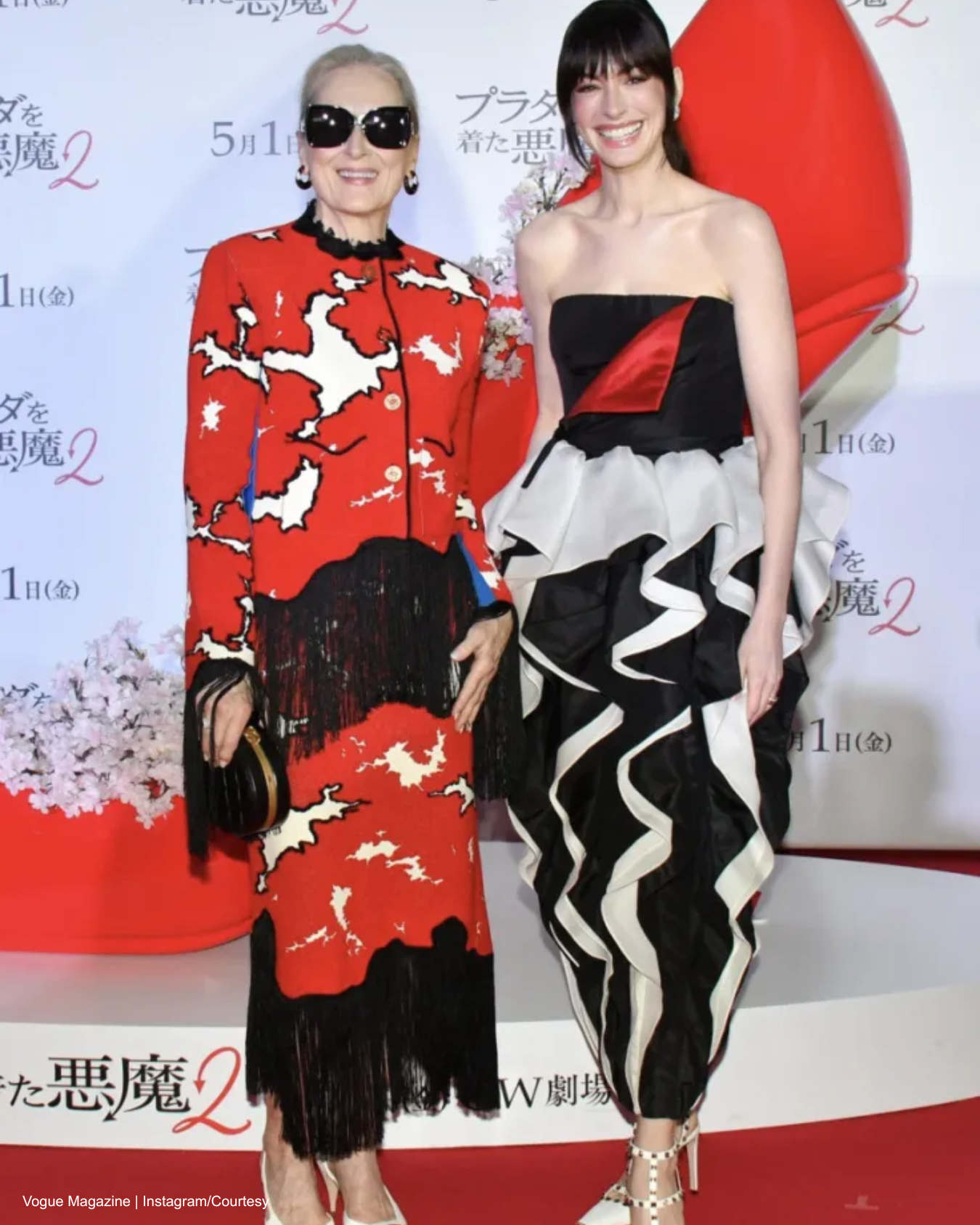
At Roppongi Hills Arena, Meryl Streep appeared in Chanel Métiers d’Art — precisely the kind of look that feels like Miranda Priestly would approve of without saying so. The red-and-white abstract print carried a controlled sense of movement, bold in pattern but disciplined in execution, as if every element had already been edited down to its final draft.
Fringe detailing along the neckline, cuffs, and hem introduced subtle motion, softening the structure without disrupting its authority. The cap-toe slingback pumps echoed classic Chanel codes, while the sunglasses and vintage clutch quietly reinforced that familiar Miranda energy — composed, selective, and entirely unbothered by interpretation.
Anne Hathaway, in contrast, wore Valentino couture that leaned into a more evolved kind of femininity. Strapless and sculptural at the bodice, the gown opened into cascading layers of ruffles that moved with ease rather than rigidity. The black-and-white palette kept it grounded, balancing romance with control.
A discreet red accent at the bodice added a restrained but deliberate point of tension—small, but impossible to ignore. Paired with Rockstud slingbacks, the look grounded its softness in structure. It felt like a quiet continuation of Andy Sachs’ arc: no longer reacting to fashion, but fully participating in it — on her own terms.
.
.
SHANGHAI STOP
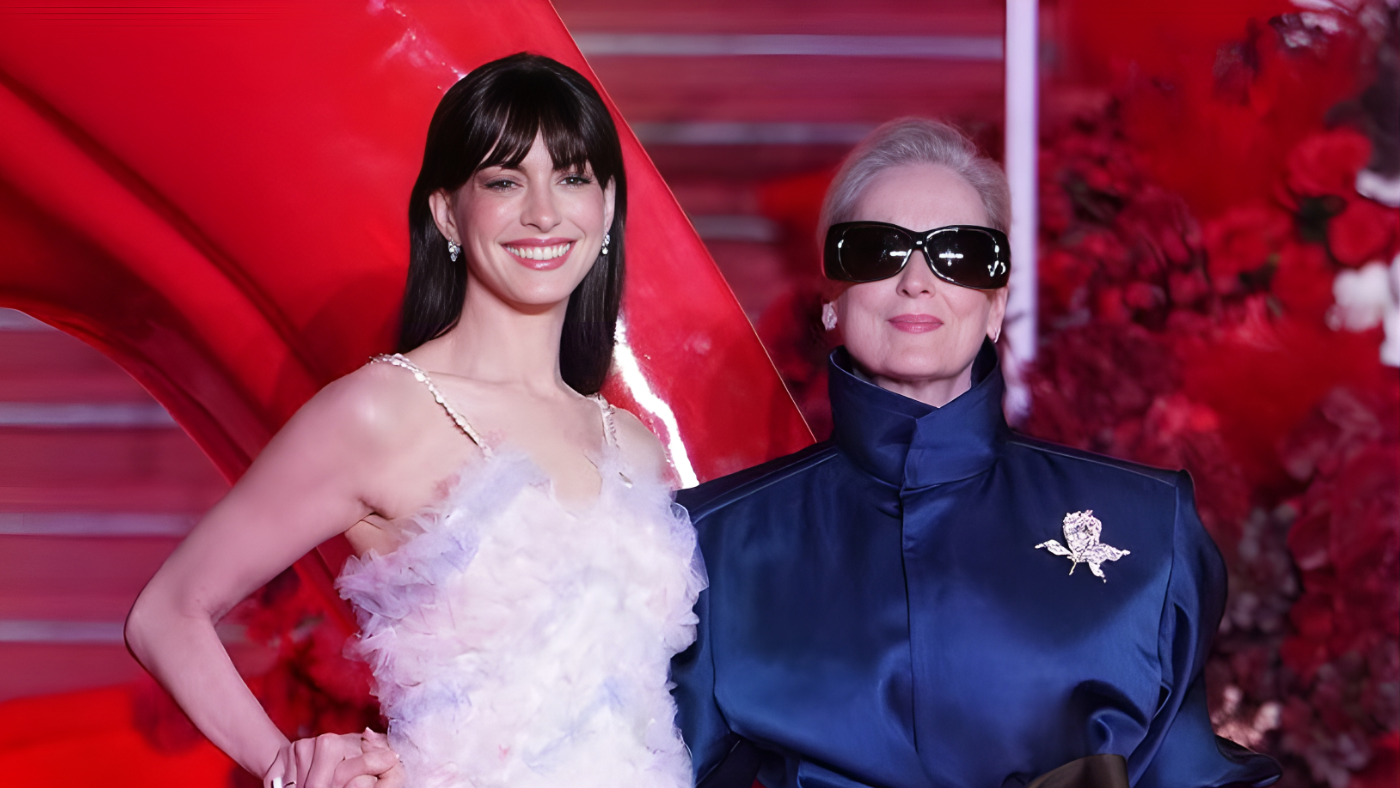
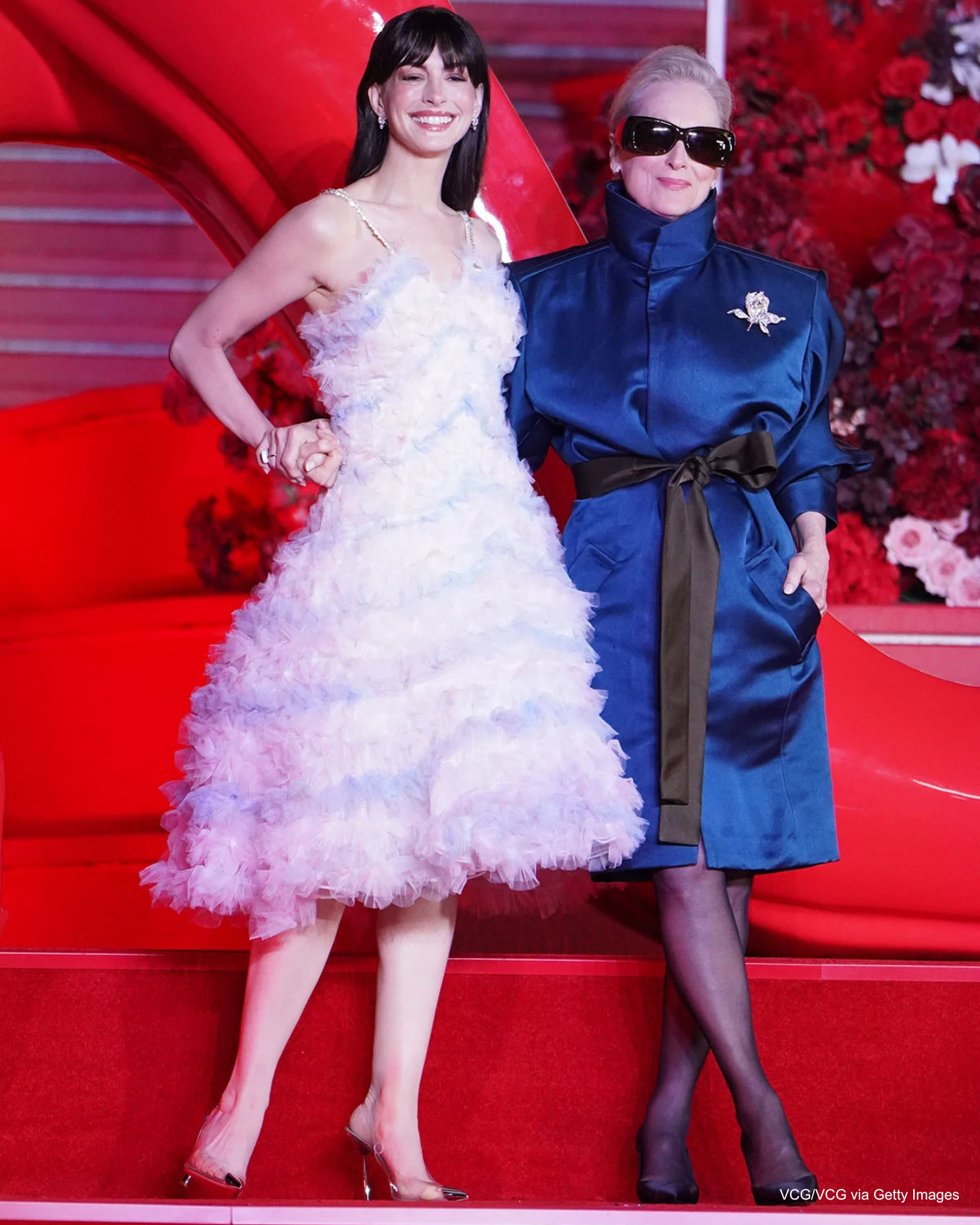
In Shanghai, Anne Hathaway wore a Susan Fang gown defined by lightness and texture. Layers of tulle in soft pink, blue, and white created a cloud-like effect, diffusing color rather than defining shape. The silhouette felt weightless, with movement driven entirely by layering.
Transparent heels kept the look grounded while maintaining its ethereal quality.
Meryl Streep’s gorgeous Saint Laurent coat shifted the mood entirely. Rendered in satin petrol-blue, the piece carried depth and quiet intensity, catching light in a controlled, deliberate way. The oversized silhouette relaxed her usual structure without diminishing presence.
Finished with sharp sunglasses and a brooch, the look relied less on tailoring and more on presence. It didn’t ask for attention the way Miranda Priestly never does — it simply had it.
.
.
Across cities and looks, there’s a clear continuity beneath the styling shifts: this isn’t nostalgia, but evolution. The silhouettes are sharper, softer, more experimental in turns—but the intention remains consistent. Fashion here is still language, still strategy, still signal. Just as Miranda Priestly taught us the first time around, what you wear is never just what you wear; it’s what you mean without having to say it.
.
.

Alike was created to inspire, built on society and storytelling — it’s curating the best features of the country’s brightest luminaries, orchestrating events catered towards the country’s top, to showcasing the finest gems in art, lifestyle, and culture.
Alike is the next generation, the movers, the shakers of today.
We are Alike.